The Hong Kong University of Science and TechnologyMarine AI · Robotics · Ocean Science · Nature-based Solutions
CMI / Center for Marine Intelligence海洋智能中心 · HKUST
HomeResearch

RESEARCH PROGRAM 04

Marine Conservation, Restoration & Nature-based Solutions

Restore coastal habitats. Understand how marine life responds.

We connect ecological engineering, coral restoration and marine intelligence to support biodiversity along urban coasts. At HKUST, the shoreline and pier offer places to develop habitat interventions, observe ecological change and bring conservation research into everyday learning.

SUB-DIRECTION 01

Smart Eco-shorelines

Test habitat-enhancing features on existing coastal structures, and observe how marine life responds to different designs.

What we study

  • Vertical seawalls

    Explore habitat features on built coastal surfaces.

  • Boulder seawalls

    Create more varied spaces for marine life.

  • Ecological responses

    Connect coastal interventions with biodiversity observations.

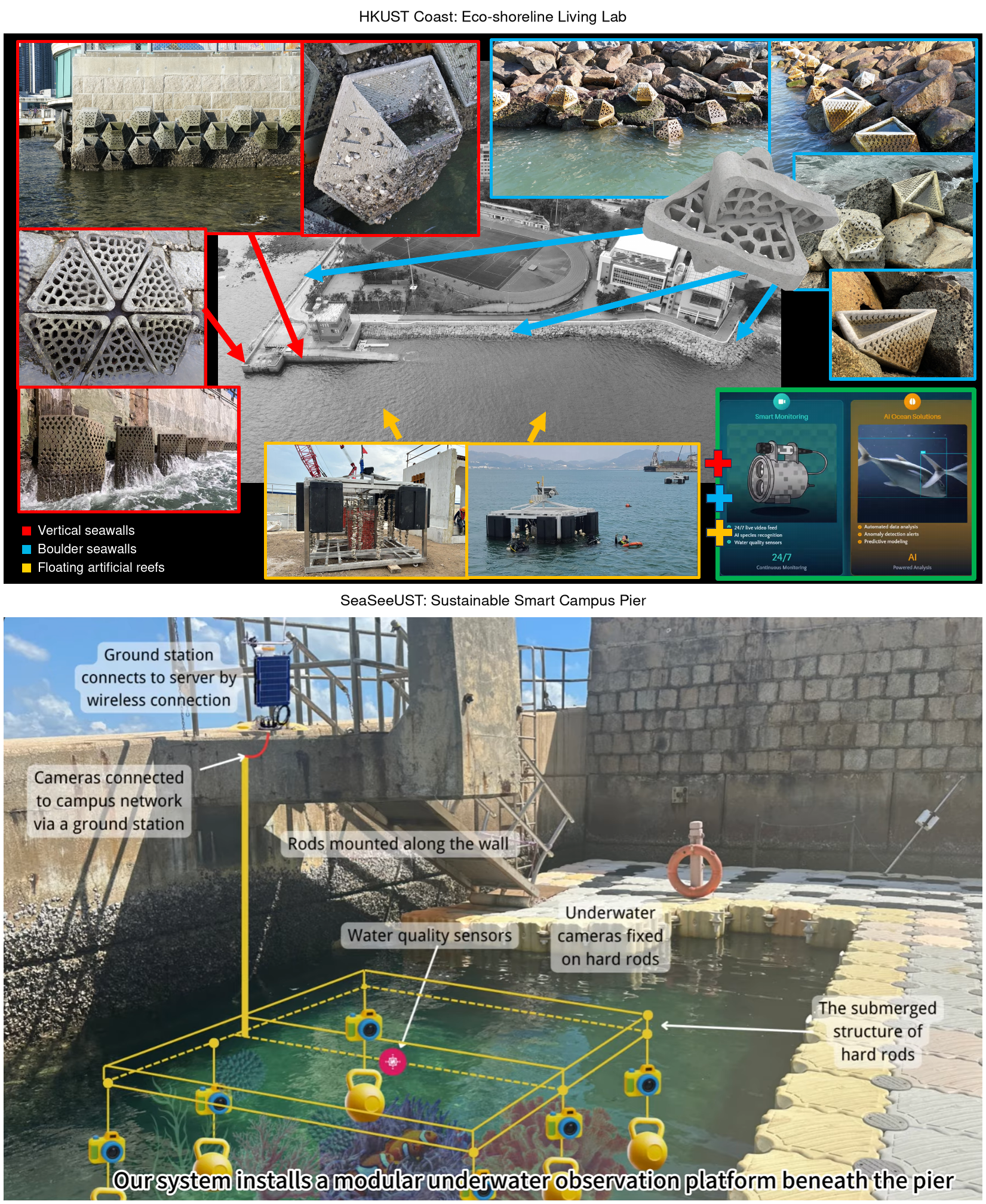
HKUST Coast concept with reference examples of habitat features on vertical and boulder seawalls, floating artificial reefs and marine monitoring.
HKUST Coast concept and reference examples of eco-engineered seawalls and floating artificial reefs.

Jay Joan Minuti’s research

HKUST Coast: Eco-shoreline Living Lab

Led by Dr. Jay Joan Minuti, the HKUST Coast concept proposes a campus space for nature-based solutions, research and education. Eco-engineered features on vertical and boulder seawalls would create more varied habitats for marine life. Drawing on eco-shoreline trials and floating artificial reef work in Hong Kong, the initiative aims to test coastal interventions, monitor ecological responses and give students direct experience of conservation in practice.

Explore Dr. Minuti's research ↗

SUB-DIRECTION 02

Nature-based Solutions & Restoration

Bring habitat enhancement and coral restoration into coastal research, with observations to help evaluate their ecological effects.

Jay Joan Minuti’s research

Floating Artificial Reefs

Floating artificial reef work in Hong Kong provides a reference for the HKUST Coast initiative. Alongside eco-engineered seawalls, it informs how coastal interventions can create habitat opportunities and support field research.

Explore the research ↗

Sai-Kit Yeung’s team

Coral Gardening & Restoration

SeaSeeUST connects coral gardening with regular visual and environmental observations. Records of species and water conditions are intended to support restoration research and help evaluate how marine life responds over time.

Explore the pier project ↓

From interventions to evidence. Habitat enhancement and restoration guide what we observe. Long-term monitoring helps researchers assess ecological responses and refine future interventions.

SUB-DIRECTION 03

Long-term Monitoring & Field Learning

Use underwater imagery, sensors and AI to track ecological change, while connecting campus research with student projects and public understanding.

What we study

  • Biodiversity monitoring

    Observe marine life through underwater cameras and AI-assisted analysis.

  • Environmental conditions

    Connect visual observations with water quality records.

  • Field learning and engagement

    Develop planned livestreams and displays for students and visitors.

SeaSeeUST concept for a modular platform beneath the HKUST pier, with underwater cameras, water quality sensors, support rods and a shore-based network connection.
SeaSeeUST concept for a modular underwater observation platform beneath the HKUST pier.

Sai-Kit Yeung’s team

SeaSeeUST: Sustainable Smart Campus Pier

Led by Prof. Sai-Kit Yeung, SeaSeeUST is developing a living marine laboratory beneath the HKUST pier. The project combines underwater cameras, environmental sensors, AI-assisted monitoring and coral gardening. Planned livestreams and digital displays will make marine life visible to students and visitors, while observations of species and environmental conditions will support research, learning and the evaluation of restoration efforts.

Explore SeaSeeUST ↗ Project Video ↗

Connections with other programs

01

Observation & Understanding

Marine AI and environmental observations provide tools to assess habitat conditions and ecological change.

02

Embodied Intelligence & Systems

Sensing devices and robotic platforms support underwater observations and field research.

03

Ecosystems & Biodiversity

Ecological knowledge helps researchers interpret biodiversity observations and evaluate restoration efforts.